Travel Guide
Chongqing is a municipality directly under the central government in southwestern China, one of the four municipalities in China, and the only municipality located inland. It is vast in area, equivalent to Austria. Chongqing is known for its unique geographical environment, spicy cuisine, and mountain city night scenes. It is also a national central city, a connection point of the Yangtze River Economic Belt, and an important base for the "Belt and Road" initiative. Chongqing was the wartime capital of the Republic of China during the Anti-Japanese War and separated from Sichuan Province on March 14, 1997, to become a municipality.
Best Time to Visit
Spring and Autumn
Daily Budget
¥400-800 ($60-120) per day
Getting Around
Rail transit (light rail/subway), Bus, Taxi, Ride-hailing, Yangtze River Cableway, Two Rivers Cruise
Suggested Stay
3-5 days
Must-Visit Attractions
Wulong Karst Geological Park (Three Natural Bridges)
Wulong Karst Geological Park (Three Natural Bridges) is located in Fairy Mountain Town, Wulong District, Chongqing. It is a World Natural Heritage site and a national AAAAA-level tourist attraction. It consists of three majestic natural stone arch bridges: Tianlong Bridge, Qinglong Bridge, and Heilong Bridge. Between the bridges are two giant karst sinkholes, Tianlong Sinkhole and Shenying Sinkhole, which together form a magnificent natural landscape. The scenic area also has many caves such as Longquan Cave and Xianren Cave, as well as unique landforms such as the Yangshui River Karst Canyon and Longshui Gorge Ground Seam. It was once the filming location for the movies 'Curse of the Golden Flower' and 'Transformers 4', attracting countless tourists with its unique karst landform and rugged natural scenery.
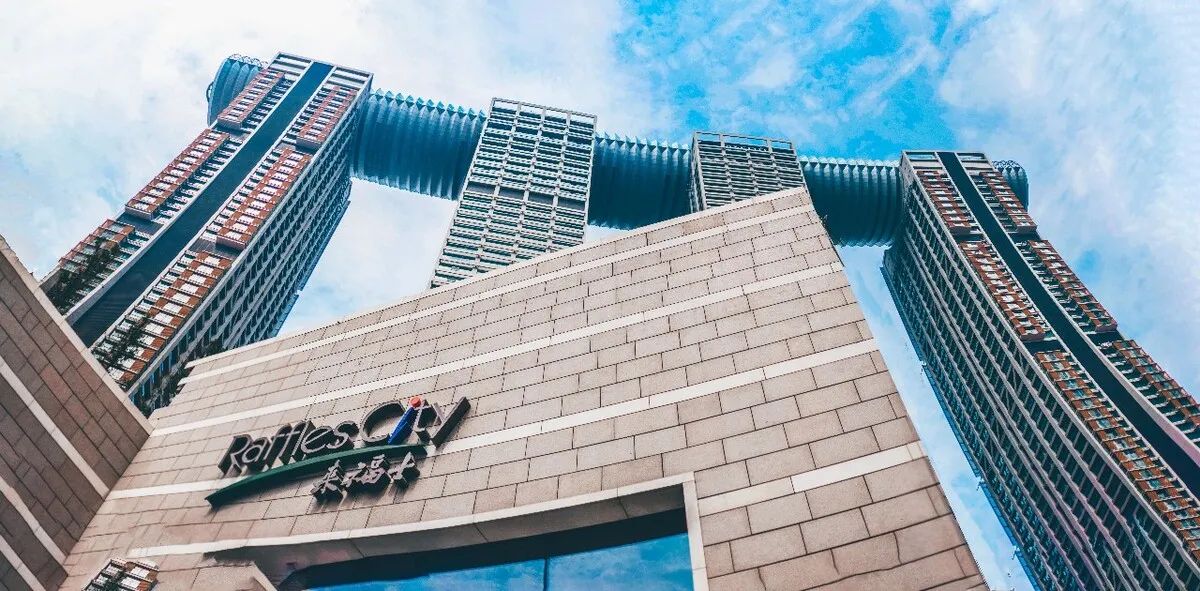
Raffles City Chongqing
Raffles City Chongqing is a complex of eight buildings located in Yuzhong District, Chongqing, China, developed by Singaporean real estate developer CapitaLand. Raffles City Chongqing features a 300-meter-long horizontal skybridge called "The Crystal" that connects the tops of four skyscrapers. The skybridge is the second highest in the world, second only to the Kingdom Centre in Riyadh, Saudi Arabia. The entire project includes eight towers with a total construction area of 817,000 square meters and was designed by Israeli-Canadian architect Moshe Safdie. It is one of the most expensive buildings ever built in China.
Hongyadong Traditional Architecture Area
Hongyadong Traditional Architecture Area is located at the intersection of Cangbai Road, Jiefangbei, the core business district of Chongqing, and Jialing River Riverside Road. It is the most characteristic "stilted building" style area of Bayu traditional architecture in Chongqing. Hongyadong is famous for its urban tourism landscape, business and leisure landscape, urban cultural landscape, and rich Bayu folk culture. The building complex is built on the mountain, with staggered heights and brilliant lights at night, and is known as the real-life "Spirited Away" fairy tale world. The scenic area includes multiple areas such as a food street, Bayu Theater, and exotic street, integrating eating, living, traveling, shopping, and entertainment.
Chongqing China Three Gorges Museum
The Chongqing China Three Gorges Museum is a museum located in Yuzhong District, Chongqing, built around the history and culture of the Three Gorges and Chongqing, and is one of the largest museums in China. The museum opened in 2005, replacing the original Chongqing Museum. It is located near the Chongqing People's Auditorium and aims to educate, protect and conduct scientific research on the cultural heritage and natural environment of Chongqing and the Three Gorges area of the Yangtze River. The museum has sloping exterior walls and a huge glass dome on top. Inside, there are bronze sculptures, large reliefs and a 1-kilometer-long "ecological corridor". The museum covers an area of 42,497 square meters and has an exhibition area of 23,225 square meters. The museum has four main exhibition halls: Magnificent Three Gorges, Ancient Ba-Yu - Early History of Chongqing, Chongqing: The Road of the City - 20th Century History, and the War of Resistance Against Japan (1937-1945). In addition, there are exhibitions of calligraphy and painting, porcelain, coins, Han Dynasty (206 BC - 220 AD) sculptures, folk customs in Southwest China, and cultural relics donated by Li Chuli. Another important exhibit is a 180° panorama of Chongqing during the war, when Chongqing was the provisional capital of Free China and suffered Japanese bombing. There is also a 360° theater showing the natural and social scenery of the Three Gorges before the dam was built. The Three Gorges exhibition on the first floor includes a model of the Three Gorges Dam.
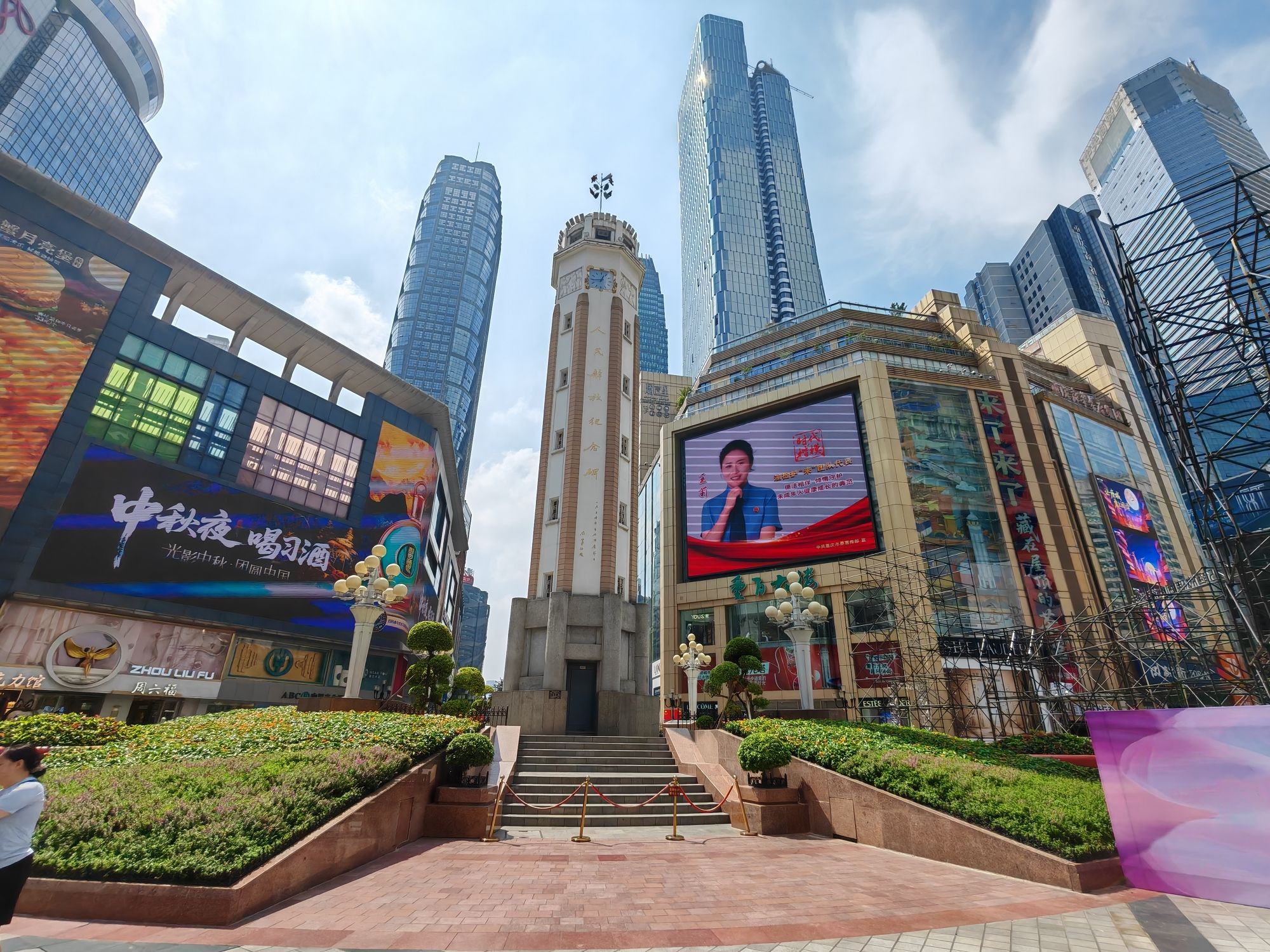
Jiefangbei Pedestrian Street
Jiefangbei Central Business District (CBD), also known as Jiefangbei Commercial Pedestrian Street, is a hyper-dense, urbanized downtown core area of Chongqing, and one of the most famous CBDs in inland Western China. It is centered around a large pedestrian square with an iconic monument (its namesake, the "Liberation Monument") and surrounded by towering skyscrapers. Thousands of shops, bars, and restaurants are located in the Jiefangbei CBD, including numerous large international department stores, upscale designer boutiques, local street food stalls, movie theaters, bars, and dance clubs; all concentrated on the pedestrian streets around the Liberation Monument and pedestrian plaza. Jiefangbei Pedestrian Street itself is lined with numerous massive shopping malls with giant LED screens and illuminated billboards, as well as the city's tallest commercial skyscrapers, world-class international hotels, and luxury residences.
Mount Jinfo National Scenic Area
Mount Jinfo, located in Nanchuan District, Chongqing, is the main peak of the Dalou Mountains and an important part of the upper reaches of the Yangtze River. Mount Jinfo is famous for its unique karst landforms and rich biodiversity. It has typical canyon, stone forest, and cave systems. The vegetation types include subtropical broad-leaved forests, coniferous forests, and subalpine meadows. It is known as a plant gene bank, with 4,768 species of seed plants, and may also contain natural Ginkgo populations. At the same time, it is also a habitat for rare and endangered animals (such as the Sichuan golden monkey). Due to its outstanding karst landforms and rich biodiversity, Mount Jinfo was listed on the World Heritage Tentative List in 2001, and was officially included in the World Heritage List in 2014 as an extension of the "South China Karst" World Heritage Site. Mount Jinfo is a National AAAAA Tourist Attraction, a National Scenic Area, a National Forest Park, a National Nature Reserve, a National Science Education Base, one of China's Most Influential Tourist Attractions, and one of Chongqing's "Twelve New Bayu Sceneries".
Must-Try Local Food
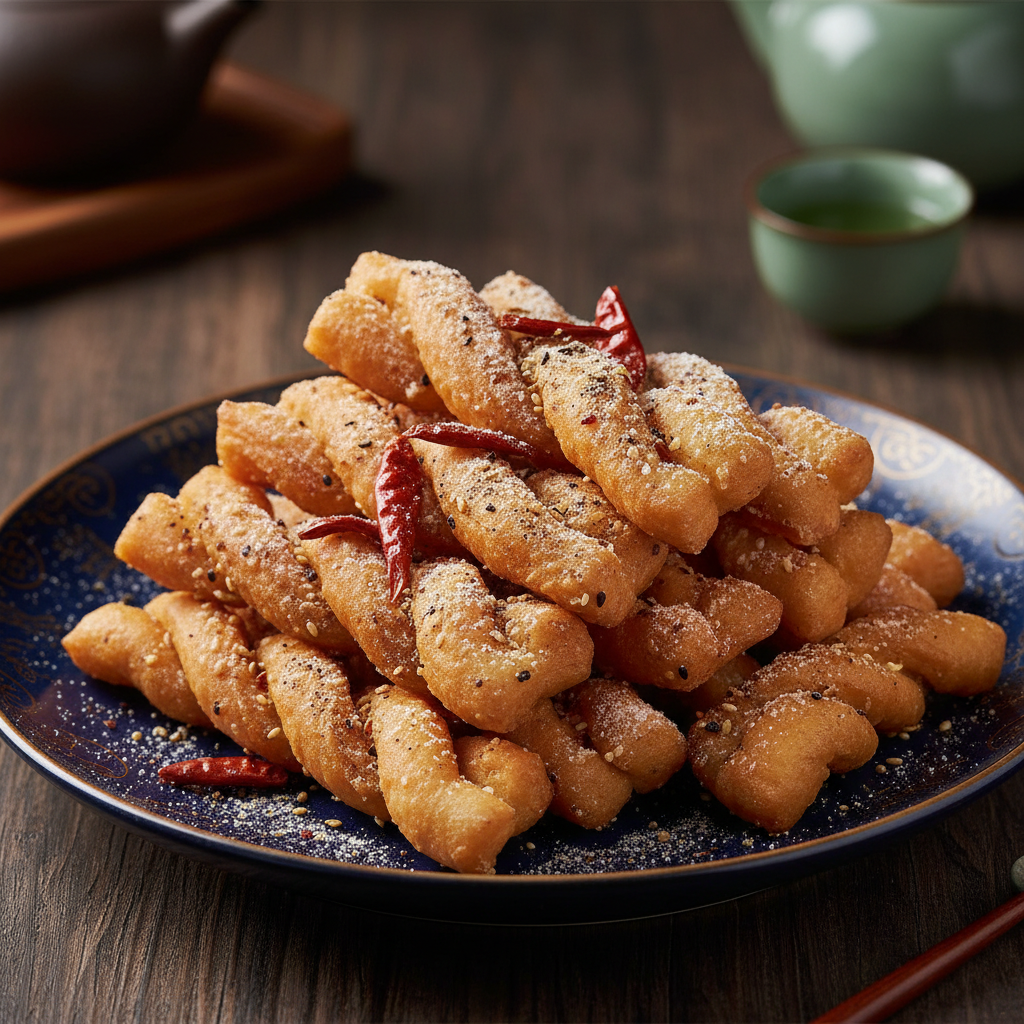
Chen Mahua
Chen Mahua is a very famous snack in the Chongqing area of China, originating from Ciqikou and becoming popular during the Qing Dynasty. It is made from twisted fried dough and has a crispy texture.
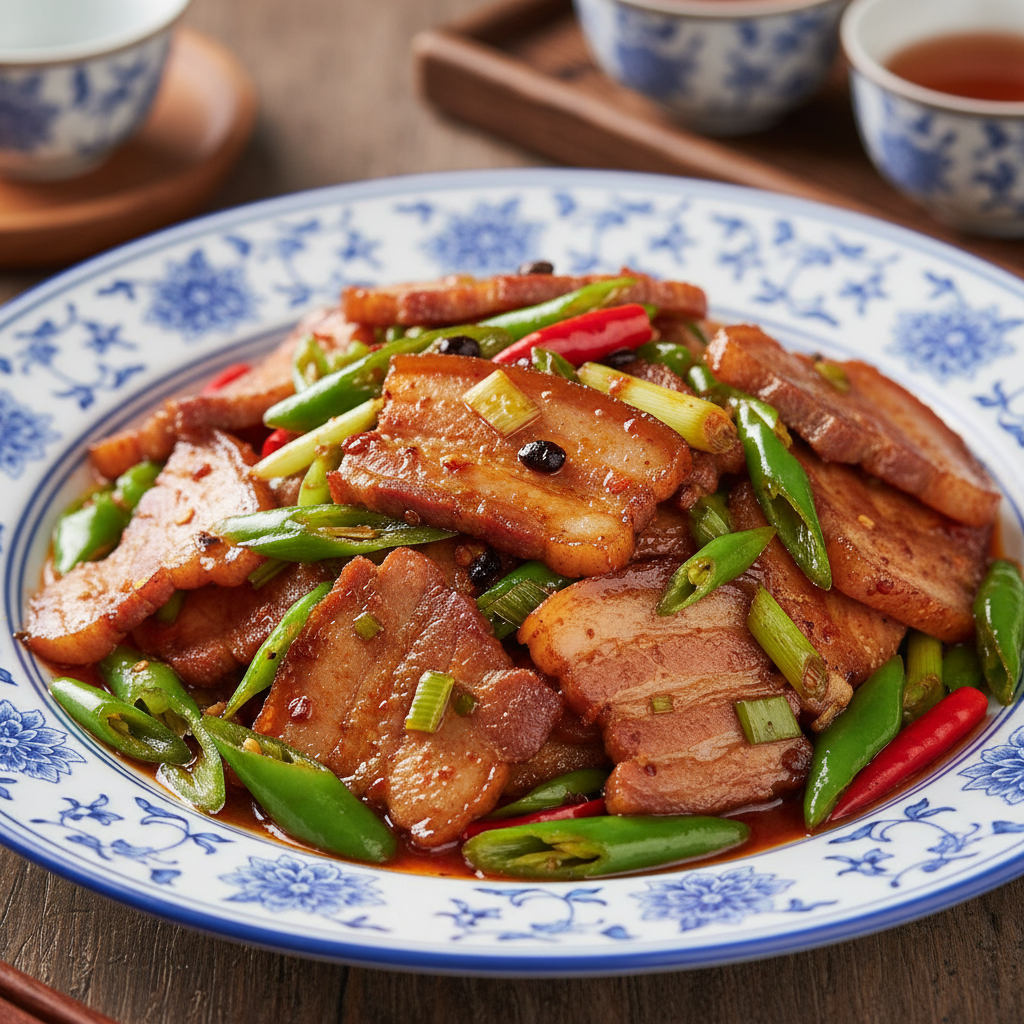
Twice-Cooked Pork
Twice-Cooked Pork (Hui Guo Rou) is a classic and famous dish in Sichuan cuisine, meaning 'meat returned to the pot'. It primarily uses pork as the main ingredient, prepared with a unique cooking method of first boiling and then stir-frying. The characteristics of this dish are its rich but not greasy fat, tender but not dry lean meat, bright red color, and mellow flavor, usually with a spicy, numbing, and savory taste. It is an essential dish for every household in Sichuan during festivals and holidays.
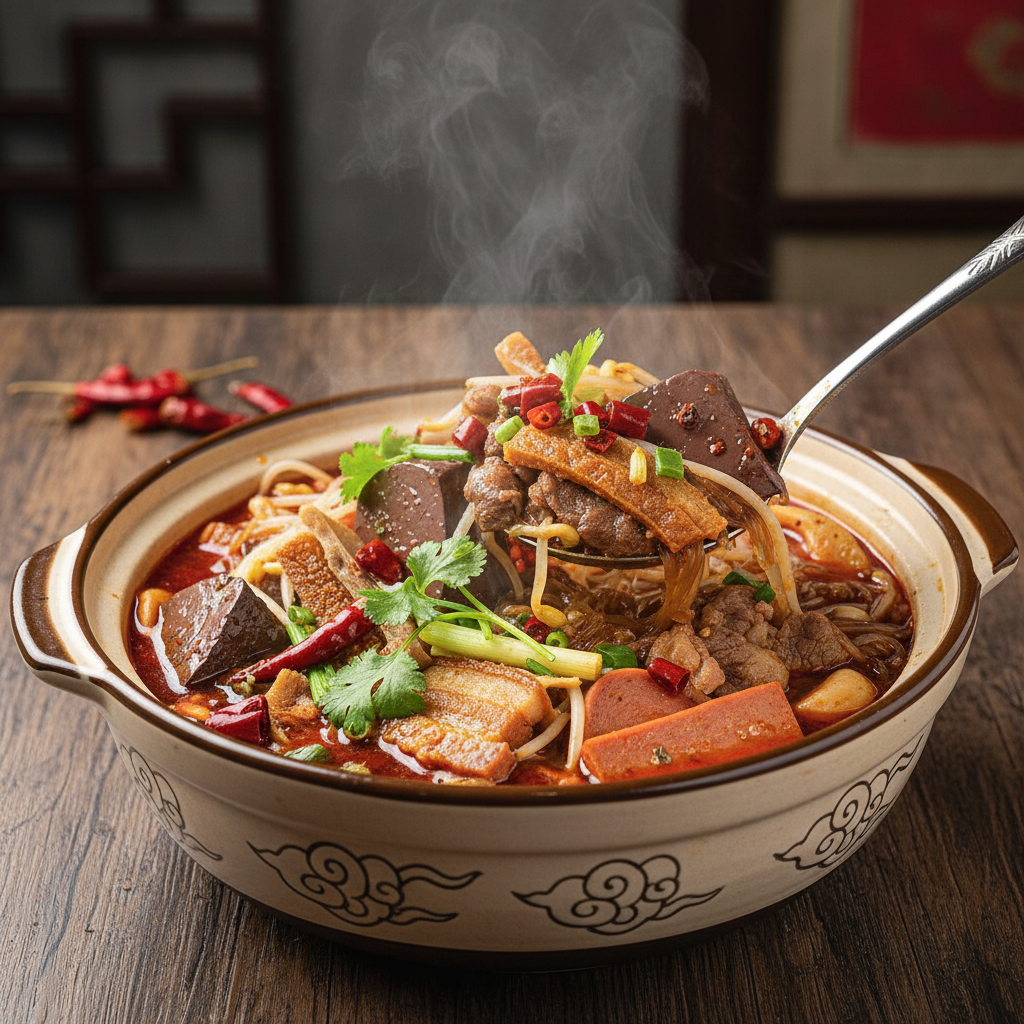
Mao Xue Wang
Mao Xue Wang is a dish originating from Sichuan, China, primarily made with congealed pig's blood, tripe, luncheon meat, eel, offal, and bean sprouts, cooked in a spicy Sichuan hotpot-style broth, offering a numbing, spicy, and savory flavor.
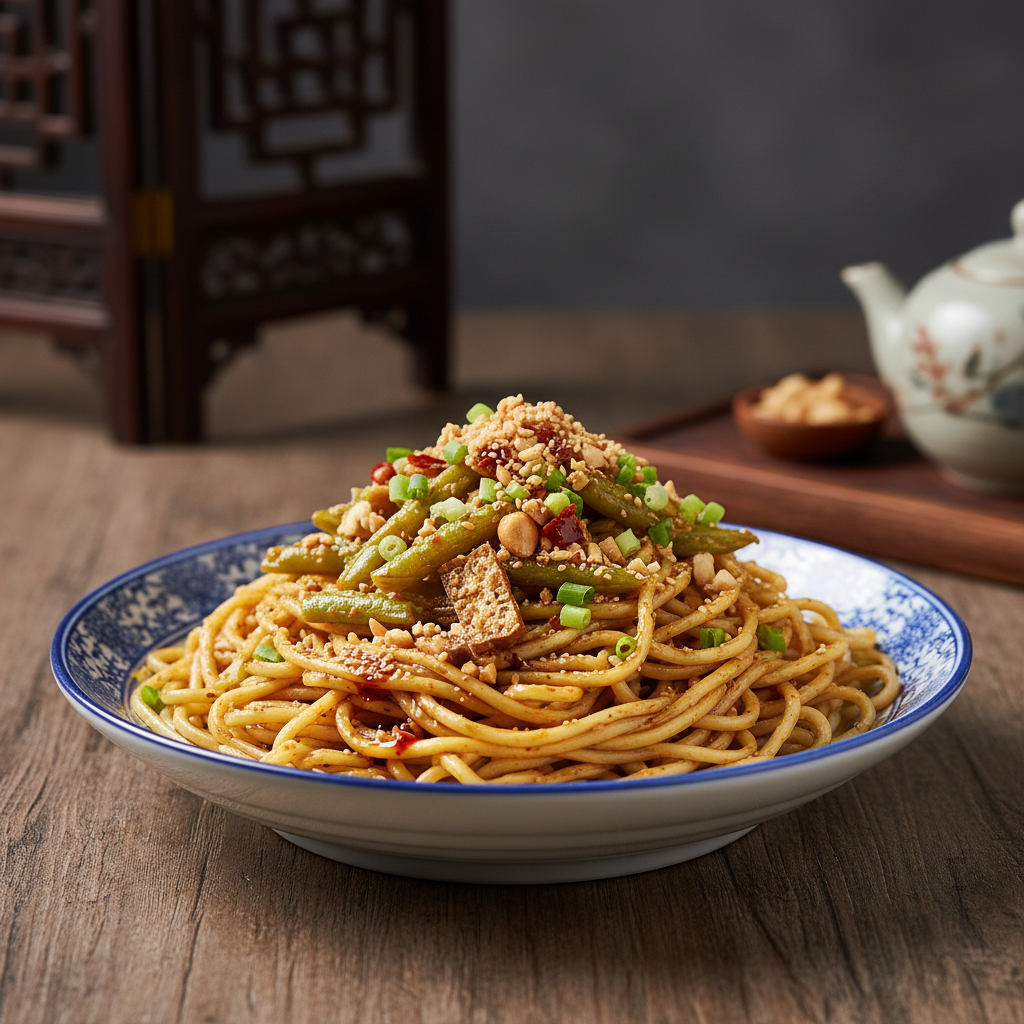
Cold Noodles
Cold noodles are a popular noodle dish across China, especially beloved in summer. It typically consists of cooked noodles that are cooled down, then topped with various sauces and side dishes. While the flavors of cold noodles vary significantly by region, they are all characterized by their refreshing and appetizing taste, and chewy noodles.
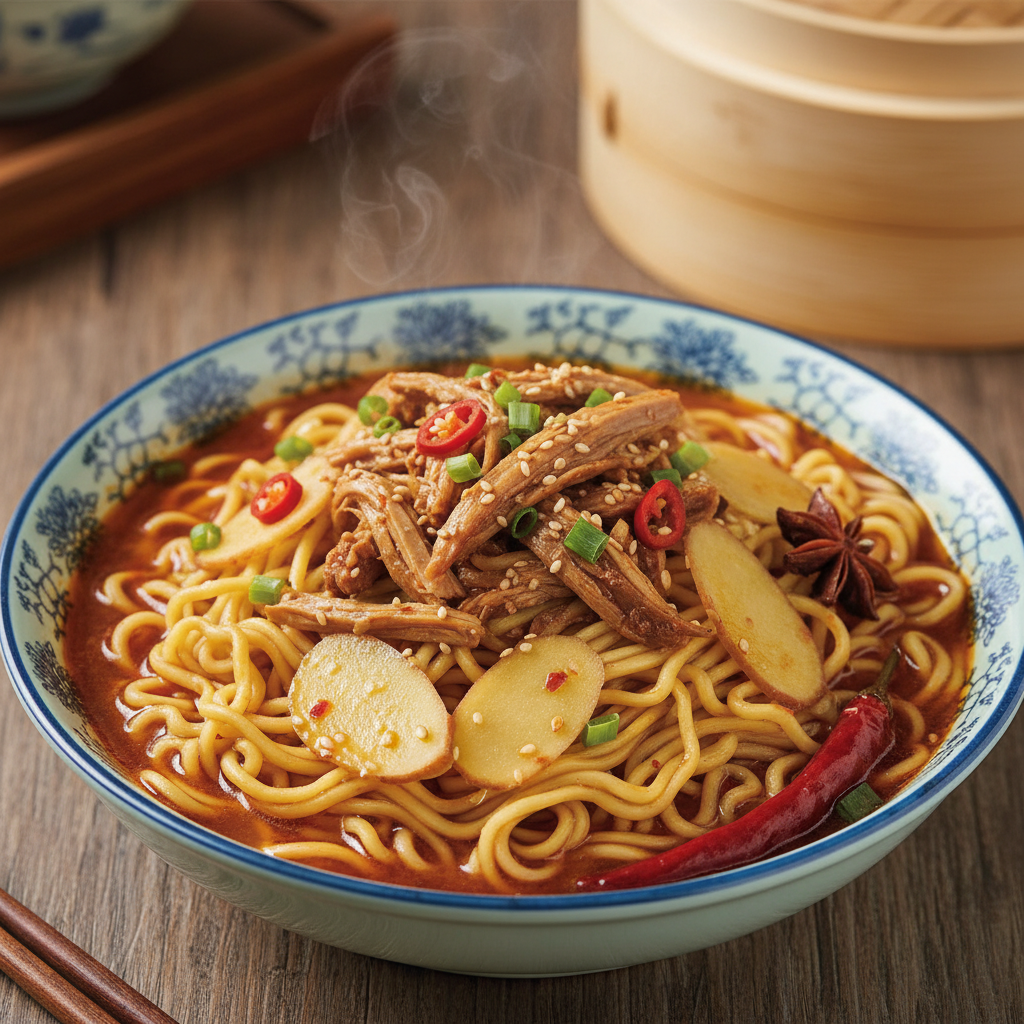
Ginger Duck Noodles
Ginger Duck Noodles are a popular noodle dish in the Sichuan region of China. However, no clear historical origin or detailed characteristics of 'Ginger Duck Noodles' have been found in existing information. It is typically prepared with duck meat and ginger as main ingredients, served with noodles.
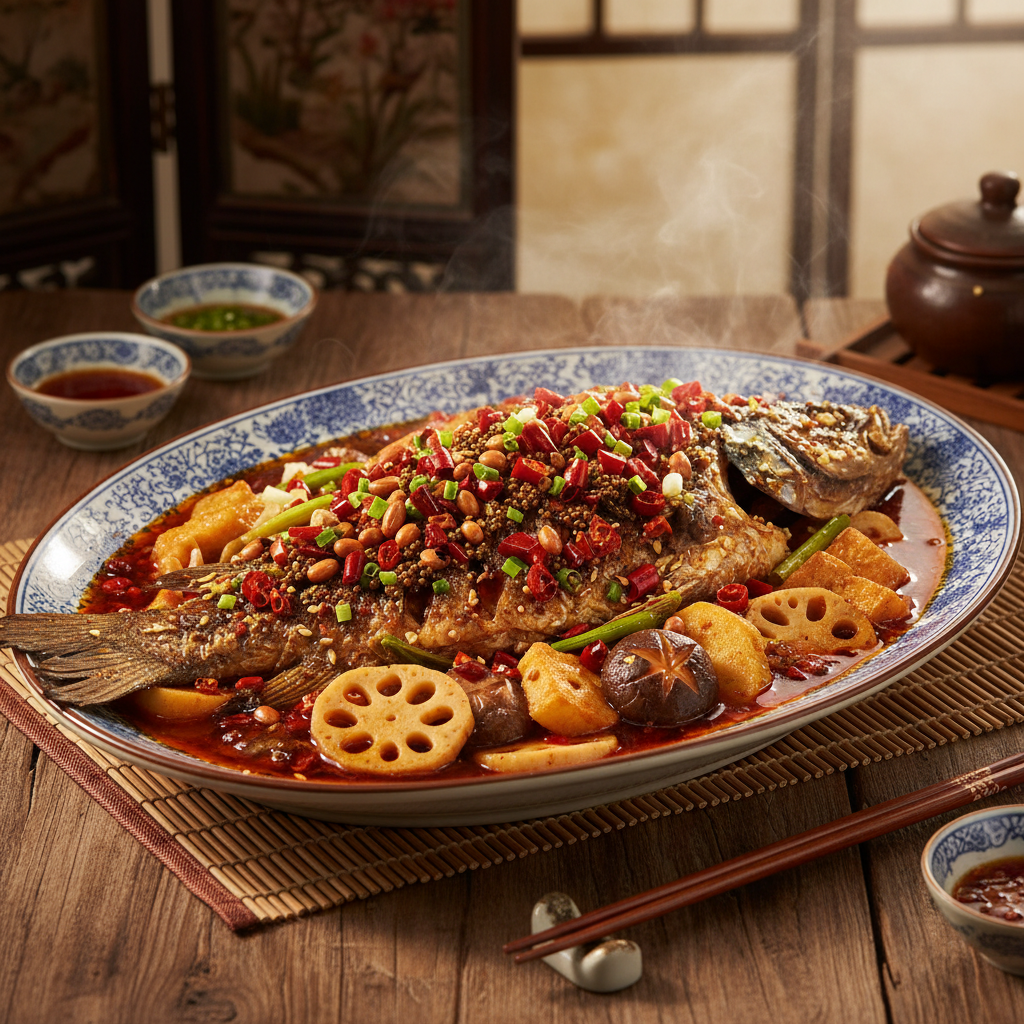
Roasted Fish
A Southeast Asian curry, traditionally steamed or grilled (over embers) in banana leaves and served with rice. The curry base is usually made from curry paste and may also include coconut cream or coconut milk and eggs. Various leaves and staple ingredients are often added to the dish.